woman sitting in the sun

Sunscreen Benefits: 4 Reasons Why You Should Wear Sunscreen Everyday

Find out sunscreen benefits, why it should be worn daily, and how it helps to protect from skin damage caused by the sun.

Should You Wear Sunscreen Every day?

It is important to wear sunscreen every day as it can protect your skin from the harmful effects of UV rays. Even on cloudy or cooler days, UV rays can damage the skin, leading to premature ageing, sunburn and hyperpigmentation. By applying sunscreen every day, you help to shield your skin from these risks, and it is an important step in any daily skincare routine.

4 Benefits In Using Sunscreen Daily:

Sunscreen is more than just sunburn protection; it helps maintain the skin year-round from skin damage caused by UV rays. By wearing sunscreen daily, you can protect your skin from lasting damage. Here are four key benefits of making sunscreen a daily habit.

 

1. Protection Against UV Radiation:

Sunscreen contains active ingredients, also known as sun filters, that absorb or reflect UV rays before they can penetrate the skin. These can be mineral filters, such as zinc oxide and titanium dioxide, or organic filters (sometimes called chemical filters). These ingredients form a protective barrier that reduces UV radiation’s impact. To provide broad-spectrum protection against UVA and UVB rays, several filters need to be mixed together.

UVA rays penetrate deep into the skin, causing long-term damage like premature ageing, while UVB rays cause sunburn and immediate skin damage. Wearing broad-spectrum sunscreen every day can protect the skin from sunburn and skin damage.

2. Prevention of Premature Ageing:

Sunscreen blocks UV rays that contribute to the breakdown of Collagen and Elastin, essential proteins that keep the skin firm. By reducing UV exposure, wearing sunscreen daily helps preserve skin structure and elasticity. 

A cause of premature ageing is Photoageing, which results from chronic UV exposure. UV rays penetrate the skin, causing oxidative stress, leading to wrinkles, fine lines, and sagging skin. Wear sunscreen daily to minimize this process, preventing early signs of ageing and skin damage.

3. Prevention of Sun-Induced Inflammation:

Sunscreen acts as a barrier to UV radiation, reducing its ability to trigger inflammatory responses in the skin. This helps prevent redness, irritation, and conditions such as sunburn and heat rashes caused by the sun

Some sunscreens also contain ingredients to moisturize the skin daily, while protecting it against UV rays, helping to keep the skin barrier intact and reducing inflammation caused by UV exposure. Daily sunscreen use helps protect both the inner and outer layers of the skin from environmental stressors.

4. Maintaining an Even Skin Tone:

Sunscreen prevents excessive melanin production, which occurs when the skin tries to protect itself from UV damage. By blocking UV rays, sunscreen helps prevent sunspots, hyperpigmentation, and uneven skin tone.  

Exposure to UV rays can cause an overproduction of melanin, leading to dark spots. Over time, this sun-induced discolouration can become permanent. Regular sunscreen application helps maintain a consistent skin tone by reducing UV damage and helps to prevent pigmentation from worsening.

The NIVEA Luminous630 Even Glow Daily Fluid SPF50 combines sun protection with advanced skincare to promote an even, radiant complexion.

NIVEA SUN for Daily Use

Wearing sunscreen daily on exposed parts of the face and body is an important step in protecting your skin, and NIVEA offers a range of sun care products to suit different needs. Whether you're looking for high SPF protection or a gentle formula for sensitive skin, there are various options available. From lotions and sprays to roll-ons of the NIVEA Protect & Moisture Range, sunscreens are designed to keep skin protected and hydrated. By regularly applying a suitable sun care product, you can stay comfortable and protected while enjoying time outdoors.

For reliable protection, the NIVEA Protect & Moisture Lotion SPF50+ offers immediate protection against UVA and UVB rays, sunburns and premature skin aging. For an ultra-light formula that feels weightless on the skin and is water-resistant, ensuring reliable protection during outdoor activities. With a non-sticky formula providing a smooth and radiant finish, perfect for everyday application, defending against the sun and UVs without compromising on comfort or appearance.
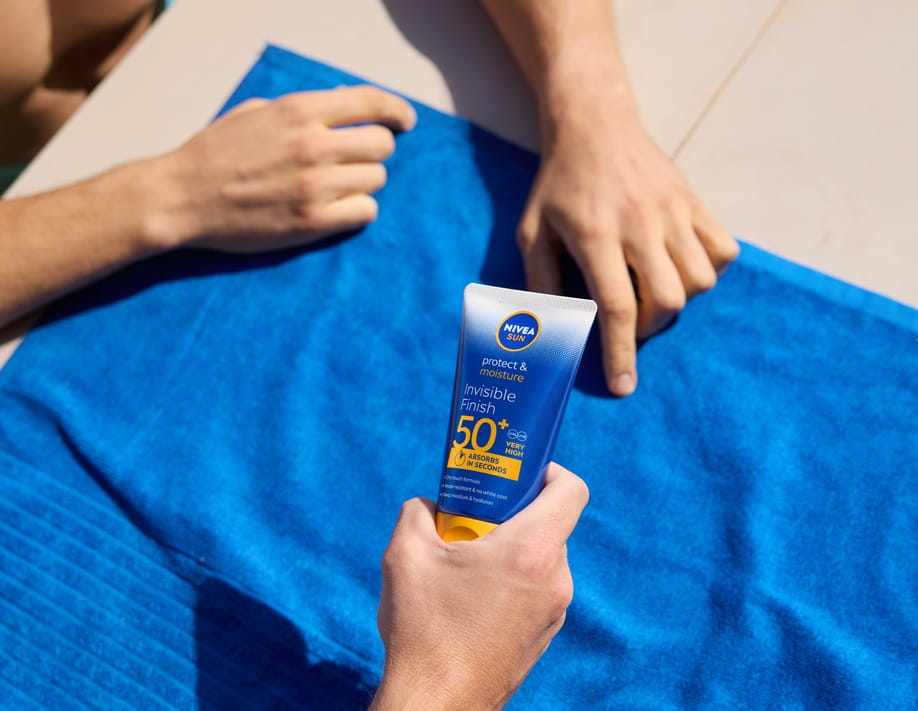
NIVEA Protect & Moisture Invisible Finish SPF50+

Daily Sunscreen During Winter:

UV exposure during winter conditions can leave skin vulnerable to dryness and damage. Although the sun’s direct exposure is reduced in the winter compared to summer, it can still lead to skin damage. Here are 4 reasons sunscreen should be worn daily in winter.
  1. UV rays in winter: 

    UVA and UVB rays are present year-round, even on cloudy or overcast days. Although not as strong, these rays can still damage your skin, causing long-term harm such as premature ageing or sunburn. Wearing sunscreen with a high to very high SPF daily ensures your skin is protected from UV radiation, regardless of the weather. 

  2. Protects against snow glare in winter: 

    Snow reflects up to 80% of UV rays, which increases exposure during winter activities like skiing or hiking. Even if the sun feels less intense, the reflection off the snow can cause significant UV damage. Applying sunscreen every day helps protect your skin from this amplified exposure.

  3. Reduces cumulative damage in winter: 

    UV damage builds up over time, even when it’s not immediately visible. Daily sunscreen use in winter helps prevent this gradual skin damage, reducing the risk of dark spots, uneven skin tone, and wrinkles caused by prolonged sun exposure over the years. 

  4. Prevents Winter Skin Damage: 

    Harsh winter conditions combined with UV exposure can cause dry skin and skin irritation. Cold weather and dry air compromise the skin barrier, making it more susceptible to UV-related irritation. So it's vital to regularly moisturize your skin with a skincare product that's right for you.
Why You Should Wear Sunscreen Everyday

Facts Overview

Application Area: 
Sunscreen should be applied to all areas of skin that are exposed to the sun, with extra care to apply sunscreen every day to areas such as the face, which is exposed all year round.

Skin Health: 
Sunscreen helps to prevent sun-induced skin damage such as discolouration, wrinkles and fine lines.

Skin Tone Maintenance: 
Sunscreen helps prevent discolouration, dark spots, and uneven skin tone caused by sun exposure, promoting a healthy-looking complexion. 

All Seasons: 
UVA and UVB rays are present even on cloudy or winter days, making daily sunscreen essential. 

Incorporate SPF Daily into Your Skincare

Wearing a low SPF daily helps to offer lightweight protection against incidental sun exposure, helping prevent long-term damage like age spots and dark spots. For seasonal elements, such as intense summer sun or reflective snow in winter, higher SPF provides stronger protection against increased UV exposure.

NIVEA SUN 2In1 Primer UV Serum SPF 50+
Moisturise daily using SPF: 

To keep your skin hydrated thanks to a daily moisturizer perfect for your everyday routine, try NIVEA Protect & Dry Touch Cream Gel SPF 30 in your daily skincare routine. It's the best sunscreen for everyday use thanks to its light, transparent formula, which provides immediate and reliable protection against UVA and UVB rays, helping protect the skin from sunburn and photoaging.

Extra daily protection: 

For extra protection, apply a broad-spectrum sunscreen. Try the NIVEA UV Face Specialist Derma Blemish Control SPF 50+. Its unique formula is designed to be light and deeply moisturizing, with UV protection. Infused with Shea Butter and Jojoba Oil, it softens the skin, offering lasting hydration. Enriched with UV filters and Vitamin E, it protects skin from sun damage.
Summary

Should Wear Sunscreen Every day at a glance

Wearing sunscreen every day can protect your skin from harmful UV rays, which can cause premature ageing, dark spots, and uneven tone. Regardless of the weather or season, UV rays are always present. You should wear SPF every day, as by making sunscreen a daily habit and removing it properly at night, you can help support your skin’s looking healthy and radiant in the long-term. Consistency is key, and this simple step can help to keep your skin protected and looking glowing year-round. Remember, however, to reapply regularly (approximately every 2 hours), to avoid exposing your skin during the midday hours and to wear suitable protective clothing.

FAQs

Should sunscreen come before or after other products?

Apply your skincare products in order of consistency, from thinnest to thickest. Sun creams with mineral filters should be applied last in your routine. For lighter, more transparent sunscreens, you can apply them either before or after your skincare, but always use a sunscreen that is adapted to your needs, with at least SPF 30, water-resistant, and broad-spectrum. Allow each product to absorb before applying the next, and finish with your makeup.

Do I really need to reapply sunscreen throughout the day?

When it comes to how often to reapply sunscreen, generally, it should be reapplied every two hours, especially after swimming or sweating.

Do I need to wear sunscreen indoors?

If you are spending a lot of time indoors by a window with direct sunlight, sunscreen application can help prevent premature signs of ageing due to UVA rays that are likely to pass through the window.

Does sunscreen come off whilst swimming?

Sunscreen should be reapplied straight after you have been in water, even if it's "water resistant", and after towel drying, sweating or when it may have rubbed off.

When should I apply sunscreen?

If possible, apply 30 minutes before venturing outside to allow the sunscreen to bind to your skin. Although some sun care products offer immediate protection, it is always best to apply them a few minutes before exposure. Always check the instructions for use on the product packaging. Reapply every two hours and immediately after swimming or excessive sweating.